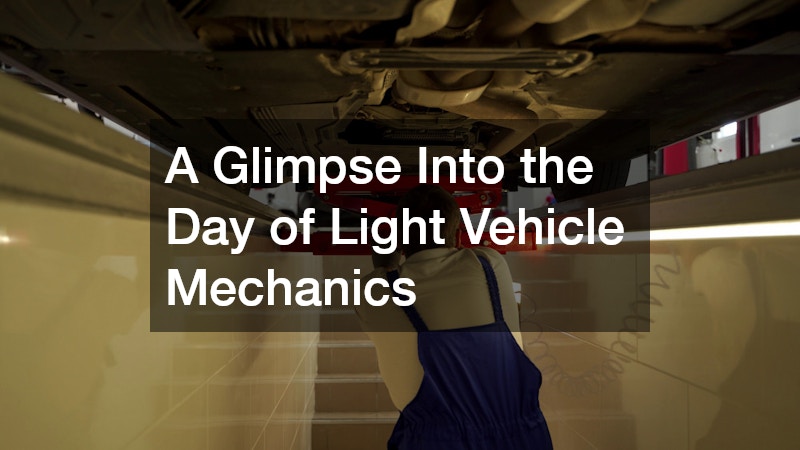

When you turn the key in your ignition or press the start button, you expect your car to come to life with a quiet, reliable hum. Whether it’s a daily commute through city traffic, a quick run to the local shops or a long weekend road trip across the Australian coastline, light vehicles — passenger cars, SUVs, utes and light commercial vans — are the unsung workhorses of our daily lives. Yet, behind every smooth gear change and dependable set of brakes sits a team of skilled automotive light vehicle mechanics.
Dawn at the Workshop & Morning Prep
The morning starts early, usually before the morning sun has completely burnt off the haze. Modern automotive workshops are a blend of heavy machinery, specialised diagnostic equipment and organised bays.
The first order of business is simple: fuel up with a fresh coffee and review the day’s job cards. The workshop foreman assigns tasks based on complexity, priority and parts availability. A light vehicle workshop is dynamic, and no two days are identical. One bay might hold a sleek modern hybrid requiring high-voltage diagnostic checks, while the bay next to it houses a trusty four-wheel drive needing a suspension overhaul after a rugged trip through the Outback.
Before the first vehicle rolls onto a hoist, safety checks are paramount. Personal protective equipment (PPE) — safety glasses, steel-cap boots and heavy-duty gloves — is donned. Hoists are inspected, fluid drain pans are positioned and electronic diagnostic scan tools are calibrated and prepped.
Diagnostics & Problem-Solving
As vehicle owners drop off their keys, the technical work begins. While routine logbook servicing accounts for a large portion of daily operations, diagnostic work is where a technician’s true expertise shines.
Consider a vehicle arriving with an illuminated “Check Engine” light and a subtle loss of power under acceleration. The process of tracking down the fault is akin to detective work:
- Scanning the On-Board Diagnostics (OBD): Plugging in diagnostic scan tools to read fault codes stored in the Engine Control Unit (ECU).
- Interpreting data live: Reviewing live sensor readings—such as mass air flow rates, fuel trim percentages and oxygen sensor responses—to isolate erratic behaviour.
- Mechanical verification: Performing manual tests, such as checking fuel system pressure, smoke-testing the intake tract for air leaks or checking engine compression.
Modern cars are effectively computers on wheels, housing dozens of electronic control modules connected via complex wiring networks. Consequently, today’s mechanics spend almost as much time interfacing with digital oscilloscopes and diagnostic software as they do turning spanners.
The Heavy Lifting: Servicing & Mechanical Repairs
By mid-morning, the workshop is a hub of focused activity. Hoists raise and lower vehicles, air-powered impact wrenches whir and the scent of fresh engine oil and brake cleaner fills the air.
Logbook servicing involves meticulously following manufacturer specification sheets to preserve vehicle warranties and maintain roadworthiness. This process typically includes:
- Fluid changes: Draining engine oil and replacing it with the precise viscosity grade specified by the manufacturer, along with changing oil, air, cabin and fuel filters.
- Brake and suspension inspections: Measuring brake pad thickness, checking brake rotor surface condition, inspecting hydraulic lines for leaks and evaluating shock absorbers, bushings and steering joints for play.
- Underbody & safety inspections: Checking exhaust systems, CV joint boots, driveline mounts and tyre tread depth across all four wheels, ensuring correct inflation pressures.
When worn parts are discovered—such as a leaking water pump or heavily worn brake rotors—the technician documents the findings, takes photos for transparency and liaises with the service advisor to obtain customer approval before proceeding with repairs.
Adapting to Modern Powertrains
The automotive landscape in Australia is evolving rapidly. Alongside traditional petrol and diesel engines, light vehicle workshops are increasingly servicing hybrid, plug-in hybrid (PHEV) and battery-electric vehicles (EVs).
Working on these modern powertrains requires specialised training in high-voltage safety procedures. When working on high-voltage components, technicians must follow strict isolation protocols: powering down the system, fitting insulated safety gloves rated for high voltage, locking out the service plug and verifying zero voltage using calibrated multimeters before touching any high-voltage cabling.
Whether diagnosing a complex hybrid regenerative braking system or replacing a conventional timing belt on a turbocharged diesel ute, versatility is key to thriving in a modern workshop environment.
Quality Control & Road Testing
Repairing the vehicle is only three-quarters of the job; verifying the quality of the work is just as essential. Every completed job undergoes a rigorous quality control routine.
- Double-Checking critical torque specs: Re-checking wheel nuts, drain plugs and major chassis bolts using calibrated torque wrenches.
- Fluid level verification: Running the engine to temperature, checking for fluid leaks and ensuring correct oil and coolant levels.
- Road testing: Taking the vehicle on a carefully planned road test route to evaluate braking performance, wheel alignment tracking, suspension quietness and overall driveability under real-world conditions.
Workshop Reset & Debrief
As the afternoon light fades, vehicles are parked out front, wiped down and sanitised, ready for their owners to collect. The tools used throughout the shift are cleaned, organised and stored back on tool trolleys or wall boards. Workshop floors are swept and degreased to ensure a safe, clean environment for the following morning.
The workday of light vehicle mechanics is demanding—it requires physical stamina, sharp analytical thinking, continuous technical learning and an unyielding commitment to road safety. When you drive your car home smoothly at the end of the day, you are experiencing the quiet reward of their meticulous craftsmanship.